
Helpful guide
How to Dispose of an Old Refrigerator Safely
A practical route from retailer take-back to professional pickup, with the refrigerant rules that matter.
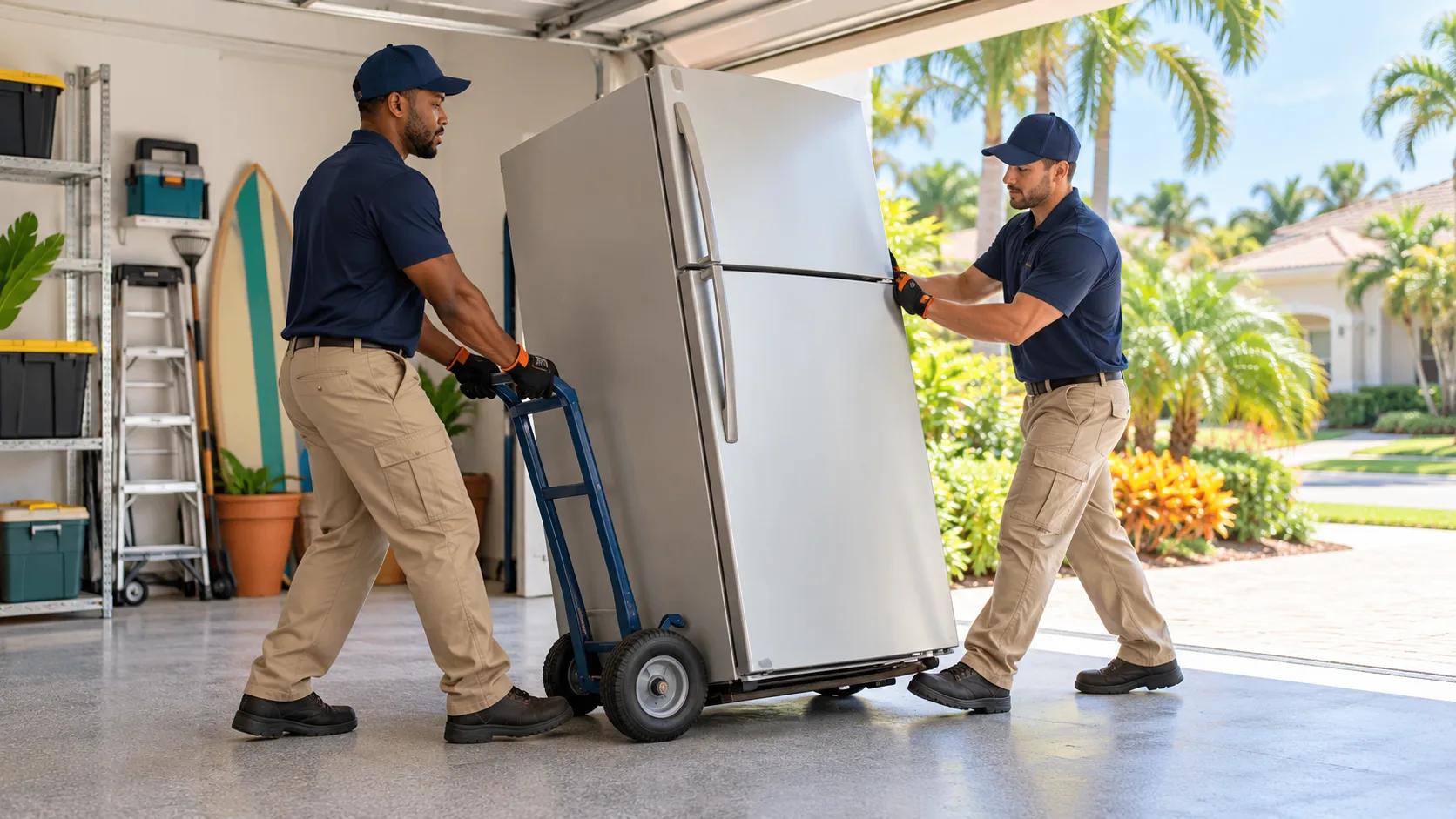
Keep the refrigerator intact and arrange a pickup that can route it through proper refrigerant recovery. Do not cut lines, remove the compressor or try to vent the unit yourself.
Choose the right route
| Option | Best when | Ask before booking |
|---|---|---|
| Retailer take-back | A replacement is being delivered | Is pickup included and must the unit be disconnected? |
| Utility or municipal program | A local turn-in or bulky-item program is active | Does the unit need to work, and is an appointment required? |
| Junk removal | You need lifting from inside or have other items too | How is the appliance routed after pickup? |
The U.S. EPA explains that final disposers are responsible for refrigerant recovery and that local programs may require appointments or proof of prior recovery. The agency also warns owners not to tamper with refrigerant lines or compressors.
Pickup checklist
- Remove food and wipe out loose spills.
- Unplug the unit early enough to defrost safely; protect the floor from water.
- Keep doors secured during staging, especially around children.
- Measure the appliance, doorways and tight turns.
- Tell the pickup team about stairs, gates and built-in cabinetry.
- Do not remove refrigerant components.
What happens after collection
Depending on the route, a unit may be evaluated for reuse, sent for recycling or disposed of after required components are recovered. EPA notes that the metal cabinet and several internal materials can be recycled, while refrigerant, compressor oil and certain other components require controlled handling.
Sources: U.S. EPA appliance disposal guidance and EPA homeowner FAQ. Federal guidance; retrieved October 21, 2026.
Need help with the lifting? See our related service, browse items we take, or request a quote.


